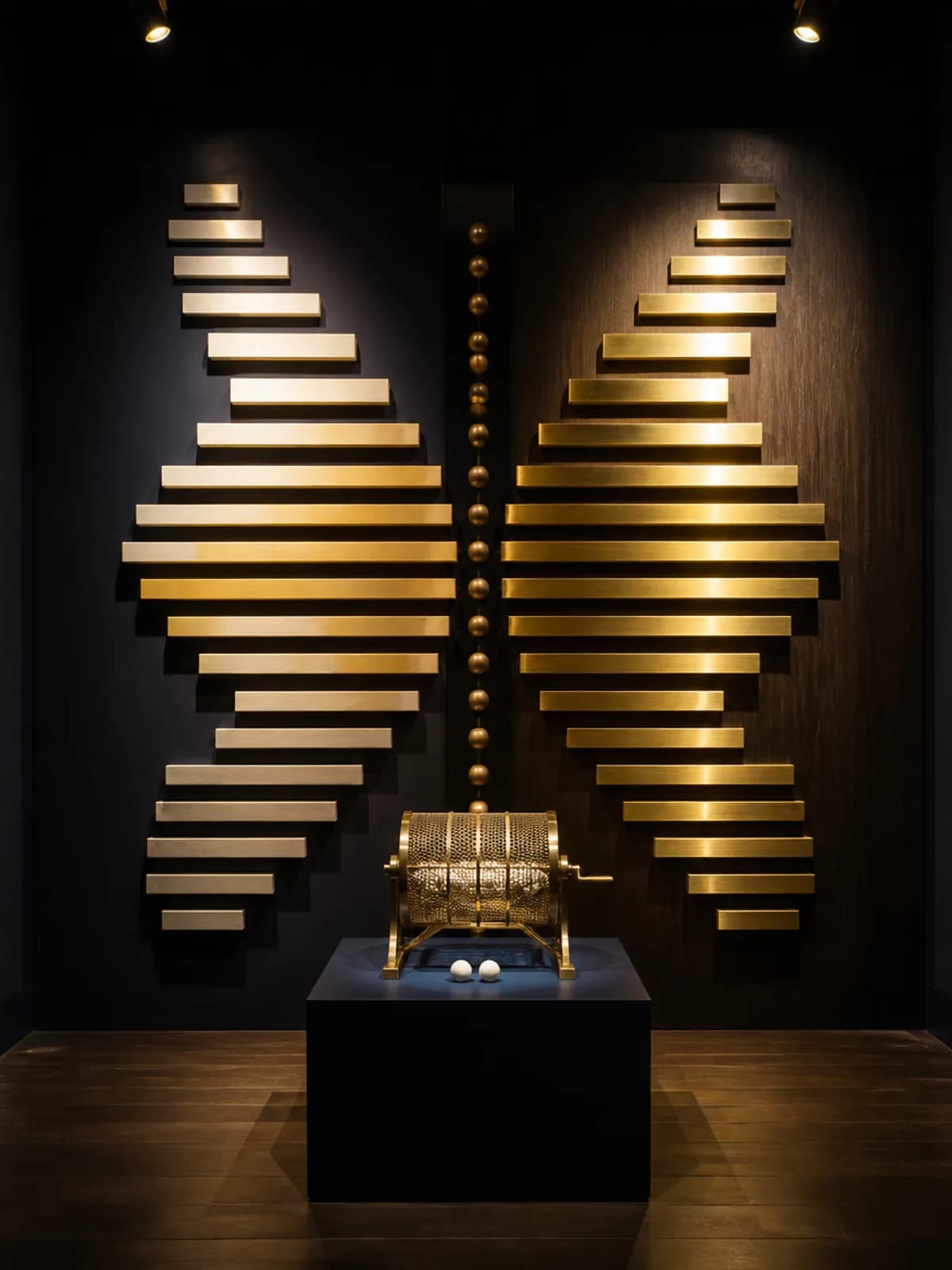
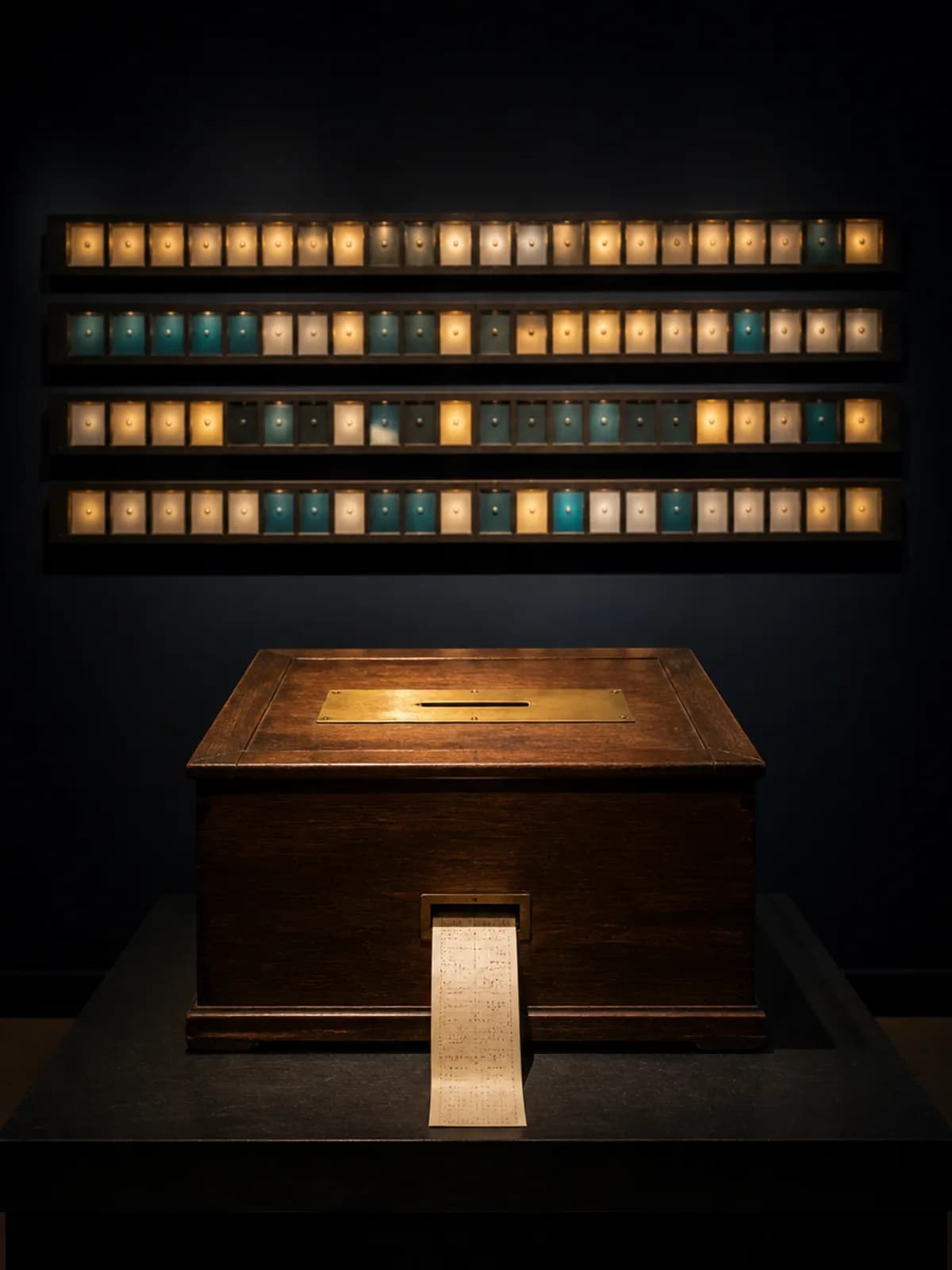
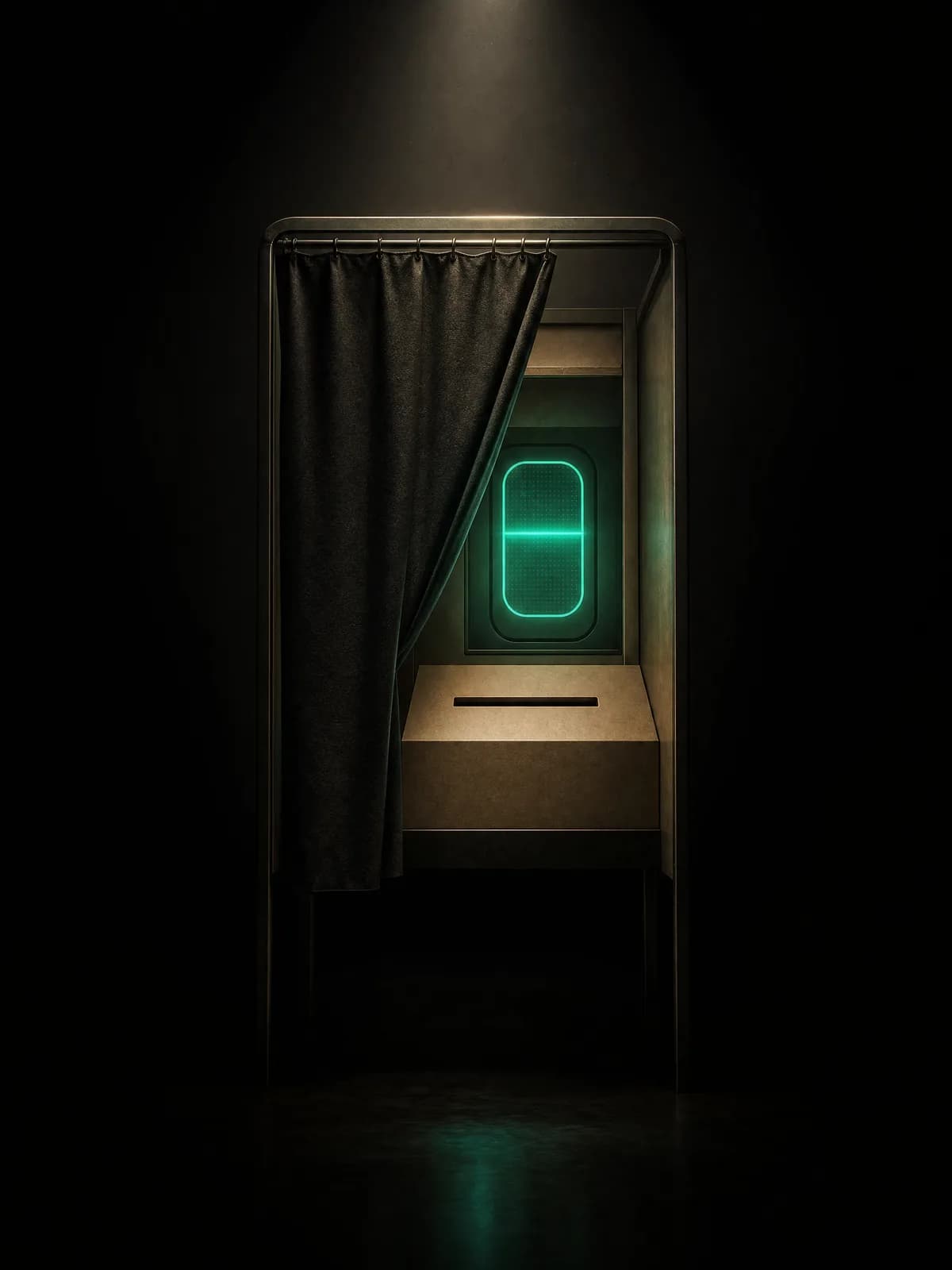
Futures of Democracyفا

یک داستان انتخاب کن؛ مجسمه به رنگ آن درمی‌آید.

یکی بود یکی نبود، در آینده‌ای نه‌چندان دور…

به دموکراسی بیشتر نیاز داریم، دموکراسی متفاوت، یا کمتر؟

چهار داستان از سال ۱۴۱۵. یکی را بخوان و اگر آینده‌ای است که می‌خواهی، انتخابش کن.

The vote · Freedom · Equality · Solidarity

How are we all doing?

از ۱۲۸۵ تا امروز

ایران، صد و بیست سال در پی رأی

  1. ۱۲۸۵

    مشروطه و اولین مجلس

    بست‌نشینان «عدالت‌خانه» می‌خواستند. نظام‌نامهٔ انتخابات، مجلس را از شش طبقه چید.

  2. ۱۳۴۲

    رأی زنان

    زنان برای اولین بار در انتخابات مجلس رأی دادند و شش زن به مجلس رفتند.

  3. ۱۳۵۸

    همه‌پرسی و قانون اساسی

    همه‌پرسی با یک گزینه: «جمهوری اسلامی، آری یا نه»؛ شکل دیگری روی برگه نبود. سن رأی: ۱۵ سال.

  4. ۱۳۷۰

    نظارت استصوابی

    شورای نگهبان تأیید صلاحیت نامزدها را حق خود تفسیر کرد.

  5. ۱۳۷۶

    دوم خرداد

    مشارکت نزدیک ۸۰ درصد در انتخابات ریاست‌جمهوری.

  6. ۱۳۷۷

    اولین شوراها

    شوراهای شهر و روستا برای اولین بار انتخاب شدند.

  7. ۱۳۸۵

    سن رأی ۱۸

    مجلس سن رأی را از ۱۵ به ۱۸ رساند؛ شورای نگهبان همان هفته تأیید کرد.

  8. ۱۳۸۸

    انتخابات و اعتراض

    انتخابات ریاست‌جمهوری و اعتراض‌های پس از آن در خیابان‌ها.

  9. ۱۳۹۴

    لیست امید

    کارزار «تغییر چهرهٔ مردانهٔ مجلس»؛ هفده زن به مجلس دهم رفتند.

  10. ۱۳۹۸

    تابعیت از مادر

    فرزندان مادر ایرانی و پدر خارجی راهی به تابعیت گرفتند.

  11. ۱۴۰۱

    پاییز ۱۴۰۱

    اعتراض‌های سراسری.

  12. ۱۴۰۲

    مشارکت ۴۱ درصد

    انتخابات مجلس با کمترین مشارکت از ۱۳۵۷. انتخابات هفتم شوراها هنوز بی‌تاریخ است.

Where did my vote go

The turnout curve, as the Interior Ministry itself tells it

Twenty-five elections in forty-five years. Drag the year and see how many of every hundred came; the dashed line is the free world's median. This curve is the system's report card, not the people's: staying home is a political act too.

۰۲۵۵۰۷۵۱۰۰۱۳۶۰۱۳۷۰۱۳۸۰۱۳۹۰۱۴۰۰Free world's median · ۶۵٪Tehran city 1402 · ۲۴٪۱۴۰۳

Majles Presidency

۱۴۰۳ · Presidency

۴۰

of every hundred

The gap to free countries: ۲۵ نفر از هر صد نفر

The lowest presidential turnout

Every one of these numbers was announced by the Interior Ministry itself, and nobody but the ministry can count. If it inflated them, the curve is lower still.

Turnout in Majles elections, 1358 to 1402، Esfand 1402 · Turnout in presidential elections, 1358 to 1403، Tir 1403 · Turnout in free countries' national elections، ۲۰۲۴ · Turnout in the city of Tehran, 1402، Ordibehesht 1403

پنج اهرم برای بحران آب

دور تند

هر اهرم چیزی را تند می‌کند و چیزی می‌گیرد. بکش و ببین.

سرعت

۲۴ ماه

هزینهٔ دموکراتیک

هیچ

هیچ اهرمی کشیده نشده؛ دو سال.

The vote · How are we all doing?

Less than half the world's people have a say. Three values, a hundred and twenty years of Iran's history, and four possible futures, one of which you choose.

How are we all doing?

Less than half the world's people today have a say in the decisions that concern everyone. Most of them live in democracies. However much modern democracies differ, they share one ideal: citizens living in freedom, solidarity and equality. Iran has been fighting for the same for more than a hundred and twenty years: from the «House of Justice» of the Constitutional Revolution in 1285 and the first Majles, to women's vote in 1342, the city and village councils since 1377, and the streets of 1388 and 1401. But what Iran has today is not a democracy: candidates are vetted by a council nobody voted for, in forty-six years no woman has reached the presidential ballot, and in the last Majles election fifty-nine of every hundred stayed home. This site is about a free Iran: an Iran where these three values can be lived, and where big questions like water, inflation and inequality are settled by vote and debate, not by decree. New tools and ideas are available from today. Let's begin; it is worth it.

Written by us

Sources

  • City and village councils: elected since Esfand 1377; the seventh election still has no datecouncils law; Guardian Council spokesman, Shahrivar 1405, Shahrivar 1405
  • The timeline's dates: twelve events from 1285 to 1402standard historical sources; turnout figures from the Interior Ministry, ۱۴۰۵
From 1285 to today

1285 · The Constitution and the first Majles: The sanctuary-takers wanted a «House of Justice». The electoral law composed the Majles of six estates.

1342 · Women's vote: Women voted in a Majles election for the first time, and six women entered the Majles.

1358 · Referendum and constitution: A referendum with one option: «Islamic Republic, yes or no»; no other form was on the ballot. Voting age: 15.

1370 · Approbatory supervision: The Guardian Council read the vetting of candidates as its own right.

1376 · The second of Khordad: Turnout near 80 percent in the presidential election.

1377 · The first councils: City and village councils were elected for the first time.

1385 · Voting age 18: The Majles raised the voting age from 15 to 18; the Guardian Council approved it the same week.

1388 · Election and protest: The presidential election and the protests that followed in the streets.

1394 · The List of Hope: The campaign «to change the male face of the Majles»; seventeen women entered the tenth Majles.

1398 · Citizenship through the mother: The children of an Iranian mother and a foreign father got a path to citizenship.

1401 · Autumn 1401: Nationwide protests.

1402 · Turnout 41 percent: A Majles election with the lowest turnout since 1357. The seventh council elections still have no date.

Written by us

Sources

  • The timeline's dates: twelve events from 1285 to 1402standard historical sources; turnout figures from the Interior Ministry, ۱۴۰۵
  • Voting age: 15 from 1358; 18 from Dey 1385 (151 for, 30 against), approved by the Guardian Council the same weekMajles resolution, Dey 1385; press reports, Dey 1385
  • Turnout in the Majles election of Esfand 1402: about 41 percent (40.6 in the first round); the lowest since 1357Interior Ministry election headquarters, via the Inter-Parliamentary Union and the press, Esfand 1402

Four stories

The world in the 2020s: eight billion people in nearly two hundred countries. About half of these countries are democracies of one kind or another. Despite new technologies, economic growth and many promises, freedom, equality and solidarity are often not guaranteed for each person. And nature usually loses. What can be done? How do we face the great global challenges? Do we need more democracy, a different democracy, or perhaps even less? Many roads are possible, but not all are desirable and some are contested. And what does a scenario look like in which democratic values no longer have a place? On the basis of scientific considerations and the views of people from different parts of society, we have written four stories: three in a free Iran, and one in an Iran that has kept to today's road. Once upon a time, in a future not so far away…

From the exhibition

دموکراسی بیشتر: بودجهٔ کوچهٔ ما (اردیبهشت ۱۴۱۵)

On the first night of Ordibehesht the neighbourhood's sports hall is full, but not for a match. This year the neighbourhood council has put a tenth of the district's development budget to the neighbourhood's vote: the pavement of the main street, the playground behind the school, or new pipes for the dead-end alley. Sara is sixteen and holds a ballot for the first time; the council voting age has been sixteen for three years. Her mother, who said «what's it to us» for twenty years, has come tonight to get the playground through. The result comes at eleven on the hall's door and in the neighbourhood channel: the playground, by seven votes. The municipality has until autumn and the council reports every month. It is slow work; it took two years to get even this tenth. But Sara now knows her neighbours' names. When the vote is about something you can see with your own eyes, how many more come?

Written by us

دموکراسی متفاوت: مجمع زاینده‌رود (مهر ۱۴۱۵)

The postman brought the envelope: «You have been selected by lot for the Zayandeh-rud citizens' assembly.» Reza, a bus driver in Isfahan, first thought it was a scam. Now it is week six. A hundred and twenty people, from Varzaneh to Chadegan, farmer and steelworker and teacher and student, sit round a big table every Thursday. One chair is empty and marked «the river»; another is for «those not yet born». Whoever wants a bigger share must speak first from those two chairs. Experts come and go; the decision is the assembly's. At the end of autumn a table signed by all goes to the Majles and the energy ministry: how many litres for the rice fields, how many for the steel works, how many for the wetland. Reza is a bus driver again, but once a month he checks the table. Do you trust a decision made by people like you more, or the decision of a representative you voted for?

Written by us

دموکراسی کمتر: شورای اضطراری آب (تیر ۱۴۱۵)

In the third year of drought, authority over water was handed to a council of nine experts; no vote, no parliament, «until the crisis is over». Shares are set by an algorithm that reads satellite images and each region's use. It is fast: a decision that took two years in the Majles is issued in three days. The tankers arrive on time, network losses have halved, and nobody in Tehran has seen a water queue. In the upstream village the orchards' share has been cut to a third. The headman goes to the governor's office; they say «the algorithm». He writes to Tehran; the reply says «the model is optimal». Nobody is lying and nobody can say why. Protest has no path either, since the council is not elected and cannot be changed. Do you want the speed, if the price is that you cannot ask why?

Written by us

بدون دموکراسی: صف (دی ۱۴۱۵)

Everything is in its place. The bus comes on time, the morning bread is fresh and the news looks the same every night. Decisions are taken above and carried out below; nobody wastes time on debate. Maryam, a teacher, no longer asks her class «what do you think?», because the right answer is known in advance. Her brother at the factory says it has got easier: no election, no list, no quarrel. Only sometimes at the table someone asks why the school's budget was halved, or why the water tanker did not come this week, and then there is silence. The queues are orderly. When everything is in its place, where is the room for a question?

Written by us

Democracy in everyday life

At home, at work, on the building's board, at the football club or the nursery; everywhere, different opinions collide. Do we treat each other democratically? Do we make decisions together? And who sets the rules? There is still room to improve, no?

From the exhibition

Deciding

Everyone thinks differently. So reaching a shared solution is not easy. Why not give way sometimes, put yourself in others' place, and let the better argument convince you? Agreement is not always «compromise»; often it is well worth it.

From the exhibition

Fast forward

Iran in the 1400s: the pandemic, sanctions, the water crisis, the blackouts of 1403, the protests of autumn 1401 and the wars of 1404 and 1405. Problems that smouldered for years burst out at once; among them the problems of politics and administration, accused of being slow, heavy and uncoordinated. But change is possible: new forms of cooperation, more flexible procedures and more democratic decision-making are being tried in places. This road looks slower at first, but in the long run it arrives sooner.

This experience's question: how could politics and administration in Iran act faster and more effectively against the water crisis? Five levers on the board, each with a place where it has been tried.

A basin citizens' assembly with a binding vote. Speeds up: Acceptance of hard decisions: when a hundred and twenty people from Varzaneh to Chadegan have signed, the municipality and the agriculture ministry have no excuse. Takes: Months of debate before any decision; elected representatives give up part of their authority. Where: France's Citizens' Convention for the Climate, 2019 to 2020: a hundred and fifty people by lot, a hundred and forty-nine proposals.

Authority over water to a basin council, not to a ministry in Tehran. Speeds up: The decision where the water is; no letter to Tehran and no waiting for a reply. Takes: Coordination between upstream and downstream, and fairness between provinces, which nobody but the centre guarantees. Where: Australia's Murray-Darling Basin Authority, 2008: one body for four states and a territory.

Open water data: dams, wells and shares, live and for everyone. Speeds up: Trust and compliance: a share everyone can see is broken less. Takes: The face of the managers who hid the shortage; constant argument over every number. Where: Spain's automatic hydrological information system: every basin's live data has been public since the 1990s.

A law with an expiry date: three years of trial, then review. Speeds up: The courage to try: when a law ends by itself, its opponents say yes more easily. Takes: Stability: the farmer and the factory plan for three years, not thirty. Where: The Texas Sunset Commission, 1977: every state agency must be re-approved every twelve years.

Emergency powers: a council of experts, no vote, «until the crisis is over». Speeds up: Everything: a share is issued in three days. Takes: The vote, the parliament, and anyone to answer the village headman; and the same council declares when the «crisis is over». Where: Cape Town, 2018: «Day Zero» was survived with a share of fifty litres a person and special powers for the municipality.

Written by us

Sources

  • The 1400s' events in the text: the blackouts of 1403, the protests of autumn 1401, the wars of 1404 and 1405press reports, ۱۴۰۵(cited)
  • The two years of a water decision: the figure in this site's story «The water emergency council» for the time a water allocation takes in the Majles; the months per lever are this site's sketchsrc/data/democracy.ts and src/data/detours.ts, Shahrivar 1405(estimate)
  • France's Citizens' Convention for the Climate: 150 citizens by lot, Mehr 1398 to Khordad 1399 (October 2019 to June 2020), 149 proposals to the governmentConvention citoyenne pour le climat, final report 2020, ۲۰۲۰(cited)
  • Murray-Darling Basin Authority: Australia's Water Act 2007; the authority since 2008 for one basin across four states and a territoryMurray–Darling Basin Authority, ۲۰۰۸(cited)
  • Spain's automatic hydrological information system: SAIH, live data of dams and rivers in every Spanish basin, public since the 1990sSpain's Ministry for the Ecological Transition, the hydrographic confederations, ۲۰۲۴(cited)
  • The Texas Sunset Commission: since 1977; every state agency is reviewed every twelve years and abolished unless re-approvedTexas Sunset Advisory Commission, ۱۹۷۷(cited)
  • Cape Town's Day Zero: 2018: a ration of 50 litres a person a day and special powers for the city; Day Zero never cameCity of Cape Town, 2018, ۲۰۱۸(cited)

The tireless watchers

The courage to speak and to act. Civil society, both a brake on power and the foundation of strong democracies.

Fair working conditions, climate justice, press freedom: civic individuals and groups draw attention to urgent questions. The campaign to save Lake Urmia, the teachers' and pensioners' associations, charities like Mahak, lawyers and journalists. Their actions range from petitions and lawsuits to peaceful gatherings and strikes. All of it puts pressure on the state and big companies to respect rights, treat the environment more responsibly, or publish data. Freedom of speech and assembly must be protected so that this pressure does not subside.

Written by us

The sleeves-rolled-up

Housing, transport, safe streets, and now tangled challenges like heating and health. A lot rests on the municipalities and city councils. City and village councils have been elected since 1377, and Tehran's neighbourhood councils are the institution closest to people's homes. Cities support each other in urban networks and are often more active than central governments in solving big problems, from pollution to water.

Written by us

Sources

  • City and village councils: elected since Esfand 1377; the seventh election still has no datecouncils law; Guardian Council spokesman, Shahrivar 1405, Shahrivar 1405

A note pinned to the gears wall

Officials should speak more clearly in conversations and explain more transparently how they reach political decisions.

From the exhibition

Now / in a free Iran

  • Now

    Turnout for the Majles of 1402 about forty-one percent, in Tehran about twenty-four.

    Turnout in the Majles election of Esfand 1402، Esfand 1402 · Turnout in the city of Tehran, 1402، Ordibehesht 1403

    In a free Iran

    The median turnout in the parliamentary elections of free democracies is about sixty-five percent.

    Turnout in free countries' national elections، ۲۰۲۴

    The gap: twenty-four of every hundred, and in Tehran forty-one.

Every number on the «now» side is from the site's fact sheet; every number on the «in a free Iran» side is a real figure from a free country or an international body, not a wish.

For discussion

  1. Which of the three values, freedom, equality, solidarity, is most lacking in your neighbourhood? How can you tell?
  2. Of the four stories, which is closest to your life today? What would have to change for another story to become possible?
  3. If one decision of your city could be put to a public vote, which would you choose? Why that one?
  4. Of the five «fast forward» levers, which do you pull and which never? Why those?

In the same theme · The vote

What can be done · The vote

  • The councils

    NowThe seventh city and village council elections have no date yet, and their candidates pass through the same vetting filter. The council you elect has its budget closed by the municipality.

    In a free IranA neighbourhood council with a share of the budget it spends itself, candidacy without a filter, and an election date written in the law, not held in anyone's hand.

  • The blank vote and staying home

    NowIn the official figures a blank ballot counts among the «invalid votes» and is announced at the foot of the page. Staying home counts too: in 1402, fifty-nine of every hundred.

    In a free IranThe blank vote has its own column and is counted. When people stay home, that is the news of the election, not a figure at the foot of the page.

  • Your representative

    NowThe representative you voted for passed the Guardian Council before you and answers to it after you. The proceedings are public; a reply to a letter usually is not.

    In a free IranA representative answers to their constituency and nobody else. Your letter is logged and answered within a legal deadline; their votes are on one page, by name.

Next: Threads of the relationship

آینده‌های دموکراسی · ایران۱۴۰۵
آینده‌های
دموکراسی
پانزده تجربه دربارهٔ آینده‌های دموکراسی در ایران
۰۰۰